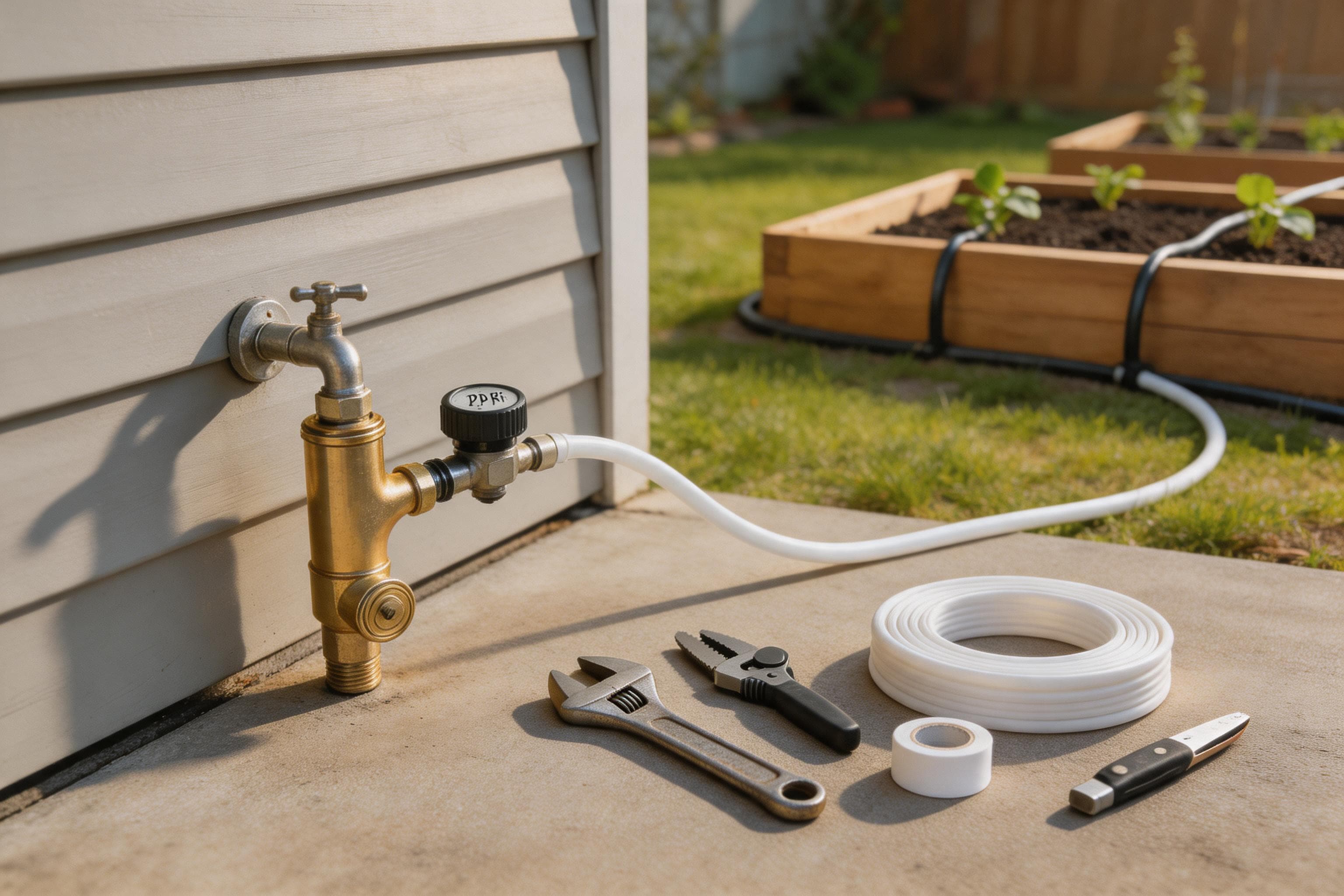
The two cheapest irrigation parts to skip are usually the two that create the most work later: the filter and the pressure regulator. This guide covers the standard homeowner stack for raised beds and small garden zones.
Why these two parts matter
Household hose-bib pressure is often far higher than drip tubing wants to see. At the same time, tiny particles from a hose, old fitting, or mineral scale can collect at emitters and turn even watering into guesswork. The regulator calms the pressure. The filter keeps debris from becoming a weekend leak hunt.
Install order first, tightening second
At the hose bib, build the stack in the correct order before you snug anything fully:
- Vacuum breaker.
- Y-filter.
- 12 PSI regulator.
- Leader hose or tubing adapter.
- Mainline into the bed.
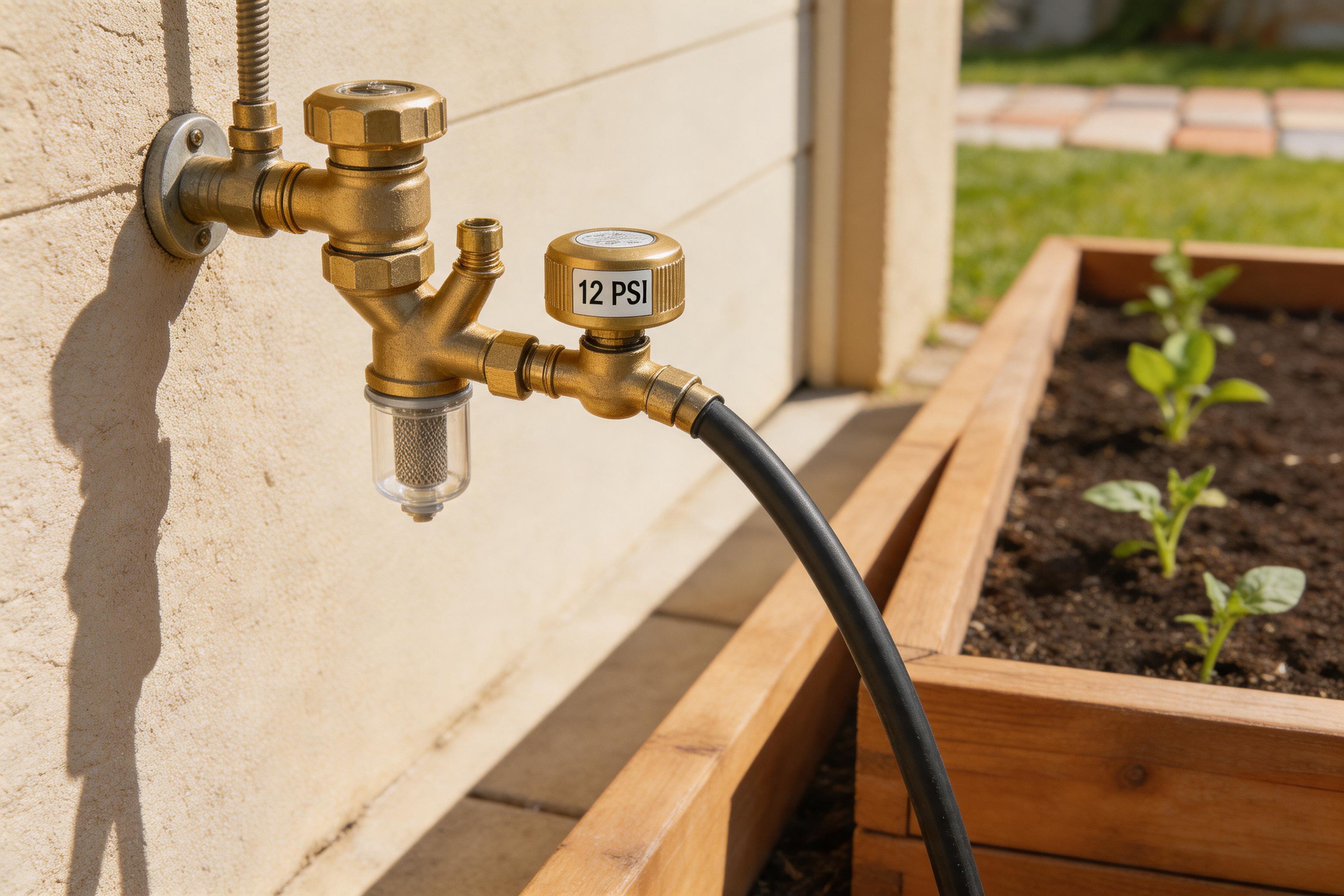
The visual check matters because many irrigation problems are simply the right parts installed in the wrong sequence.
What to look for during the first run
Turn the water on slowly. Check three places first:
- The filter cap and screen housing.
- The regulator threads and washer seat.
- The first adapter where tubing leaves the metal stack.
If one joint weeps immediately, shut the water off and fix it before pressurizing the rest of the bed. A small drip at the bib becomes a muddy patch fast.
Good homeowner practice
Flush the line after the first install and again after any filter cleaning. Keep one spare washer and one spare regulator on the shelf. These systems fail at serviceable joints, not at the emitters buyers stare at first.