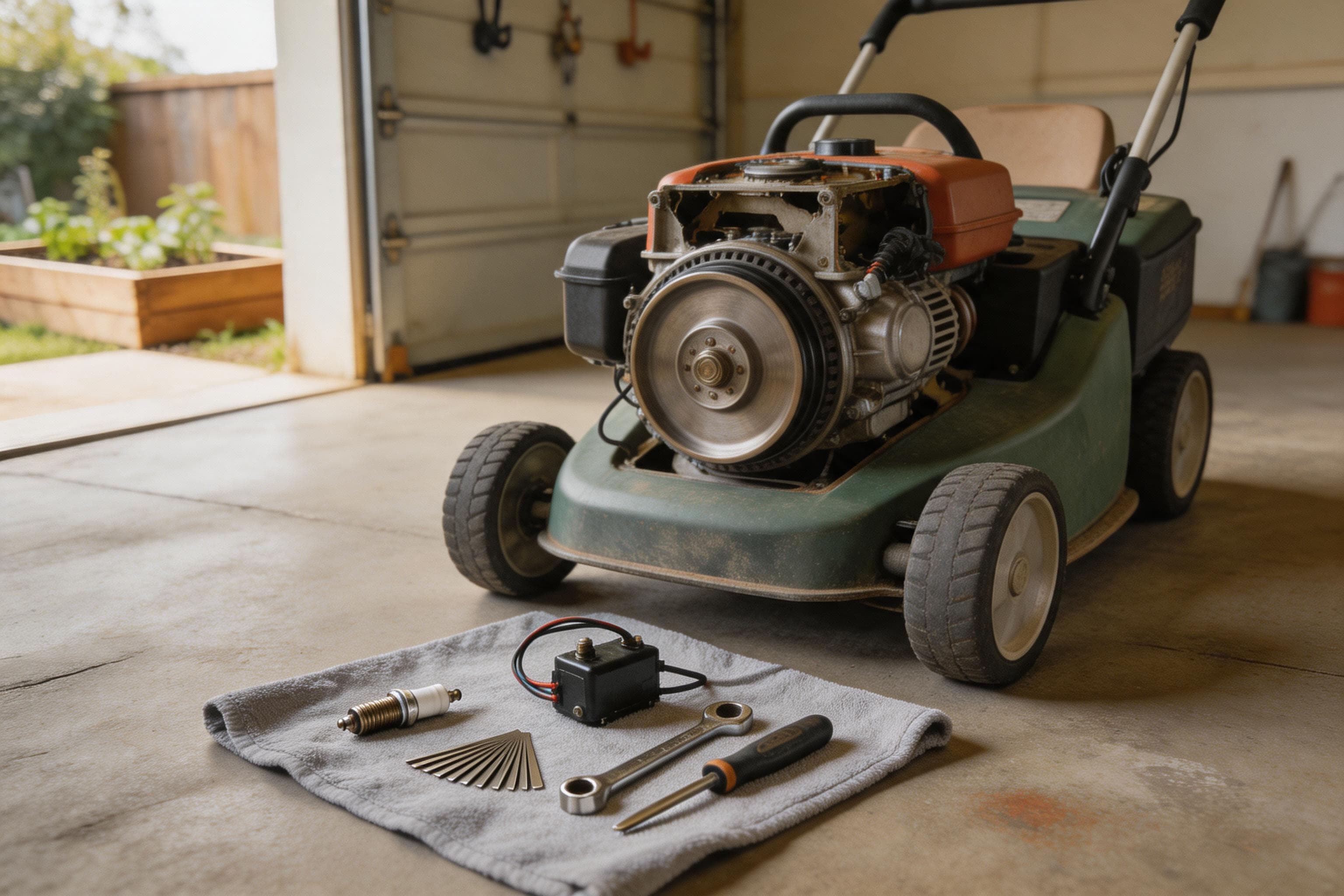
Ignition coils get blamed because "no spark" sounds like a coil problem. Sometimes it is. Just as often, the coil gets ordered before the easy checks happen, and the real fault turns out to be a dead plug, a grounded kill wire, or corrosion under the shroud after winter storage.
The goal is not to make homeowners do lab work on the driveway. It is to avoid replacing an expensive suspect before the obvious suspects have been cleared.
Start with the simple spark path
Before you decide the coil is bad, check:
- spark plug condition and gap
- plug boot fit
- kill wire not pinched or permanently grounded
- flywheel magnets clean and intact
- air gap between coil and flywheel
If one of those is wrong, the coil can look guilty while behaving normally.
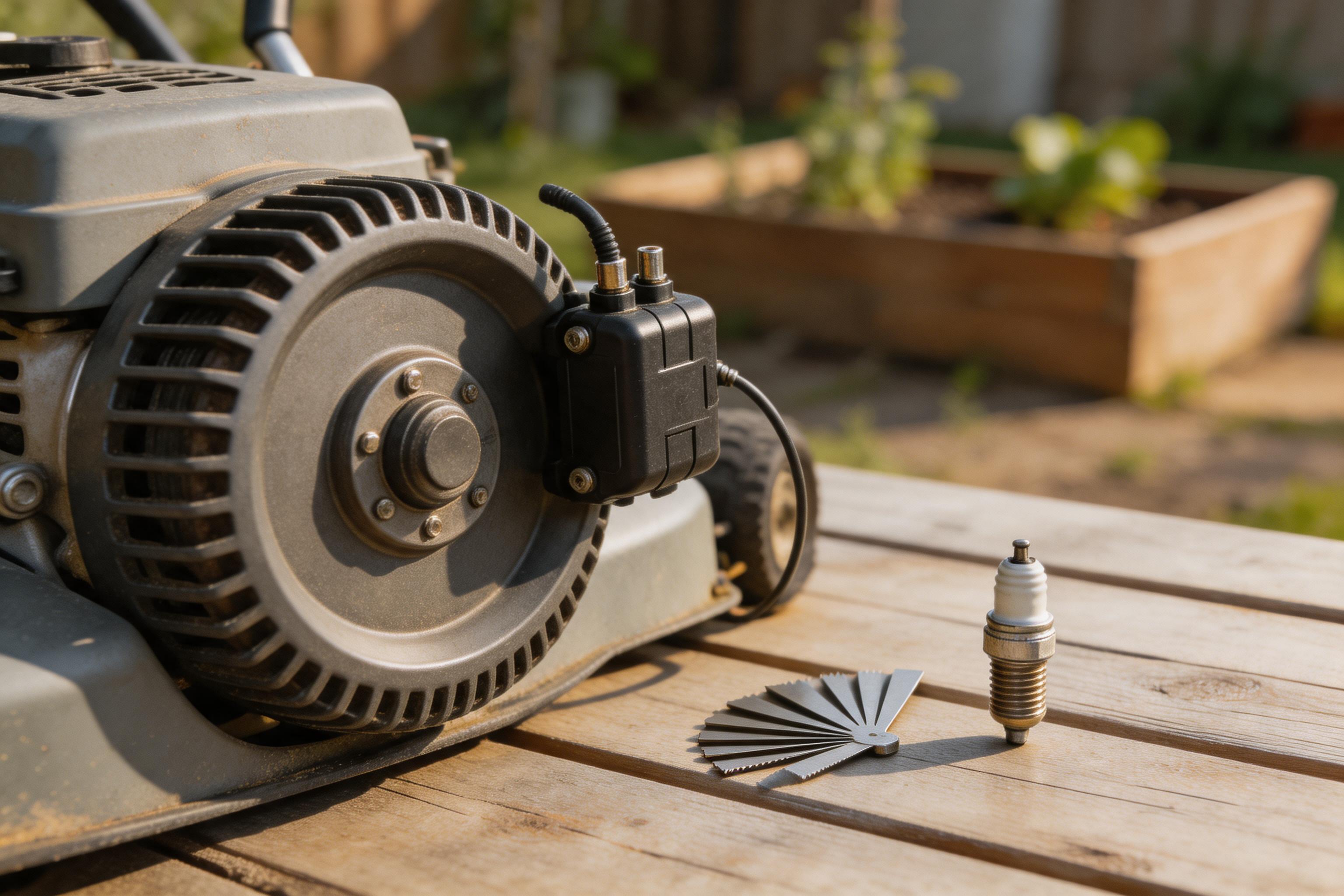
That close-up is where most wrong diagnoses get corrected. A healthy coil with a bad air gap or grounded kill wire still produces a no-spark complaint.
What actually points toward the coil
A coil becomes the stronger suspect when:
- the plug is known good
- the kill wire is disconnected for testing
- flywheel magnets pass by the coil normally
- air gap is set correctly
- there is still no spark under repeated pull-start or cranking
On some mowers, heat-related failure is the clue. The engine starts cold, runs for a while, then dies hot and refuses to restart until it cools. That pattern can be coil-related, though fuel issues can mimic it.
A practical backyard sequence
- install or test with a known-good spark plug
- inspect the plug boot and wire
- disconnect the kill wire temporarily for diagnosis
- set the coil air gap to spec using a business card or feeler gauge where appropriate
- test for spark again
If spark returns only after the kill wire is removed, the coil may be fine and the stop circuit is the real fault.
What not to confuse with a bad coil
- stale fuel after storage
- carburetor varnish causing no-start
- low compression
- sheared flywheel key changing timing symptoms
Those faults can create "won't start" reports that sound electrical but are not.
When ordering the coil finally makes sense
Order the coil once the spark path around it has been checked and the mower still has a clean no-spark condition. That is the point where replacing the coil is a decision, not a guess.