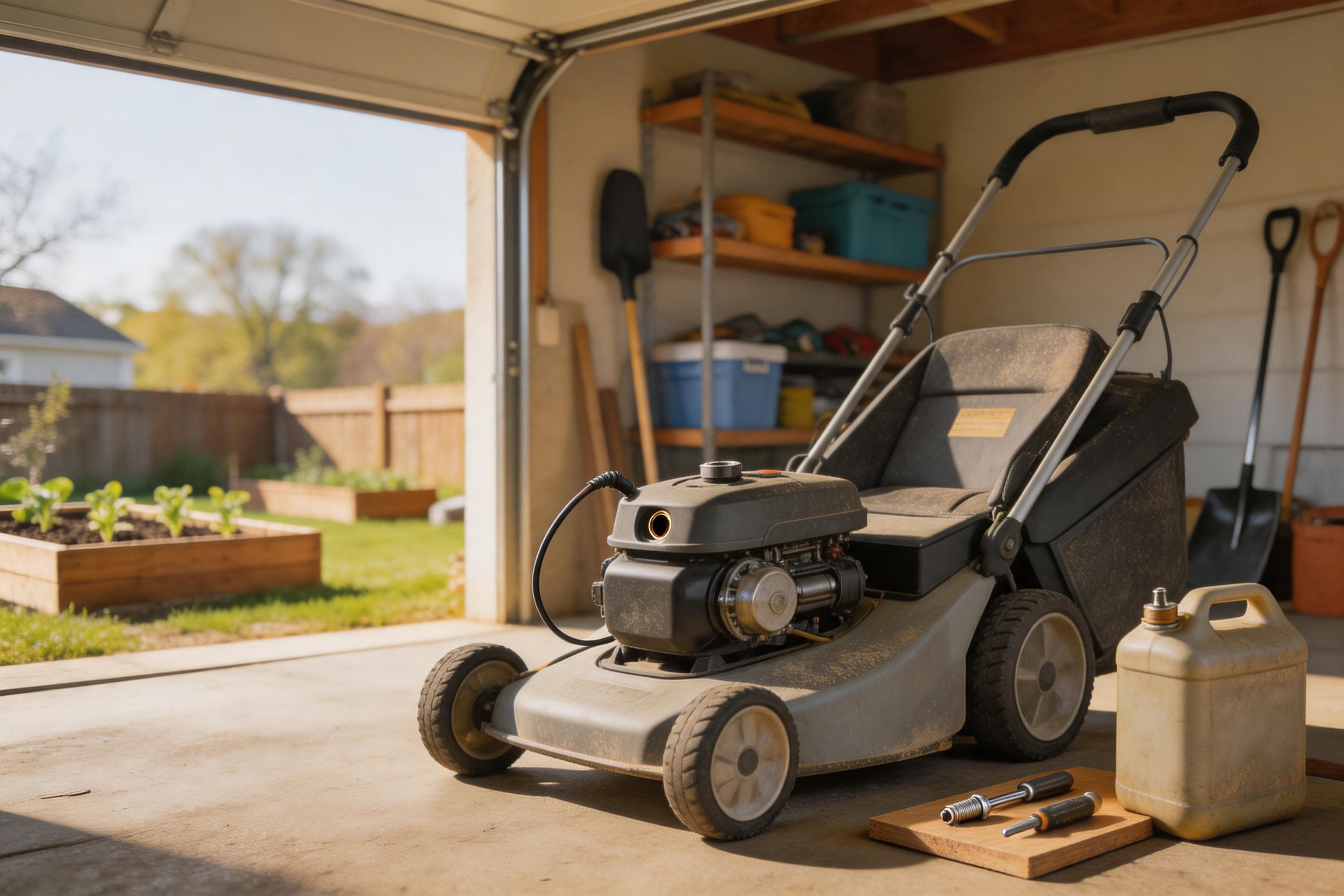
The first spring no-start often gets described as a fuel problem. The second failed pull suddenly becomes "maybe the coil is dead." Sometimes that is true. After storage, though, no-spark complaints often come from the parts around the coil rather than the coil itself.
Winter storage is hard on electrical contact points, exposed terminals, and spark plugs that were already marginal when the mower was parked.
The storage-related faults that mimic a bad coil
After a long layup, check these before ordering parts:
- spark plug fouled or internally dead
- plug boot loose on the terminal
- kill-wire terminal corroded or stuck grounded
- rust or debris changing the coil-to-flywheel relationship
- mouse damage or abrasion on the lead
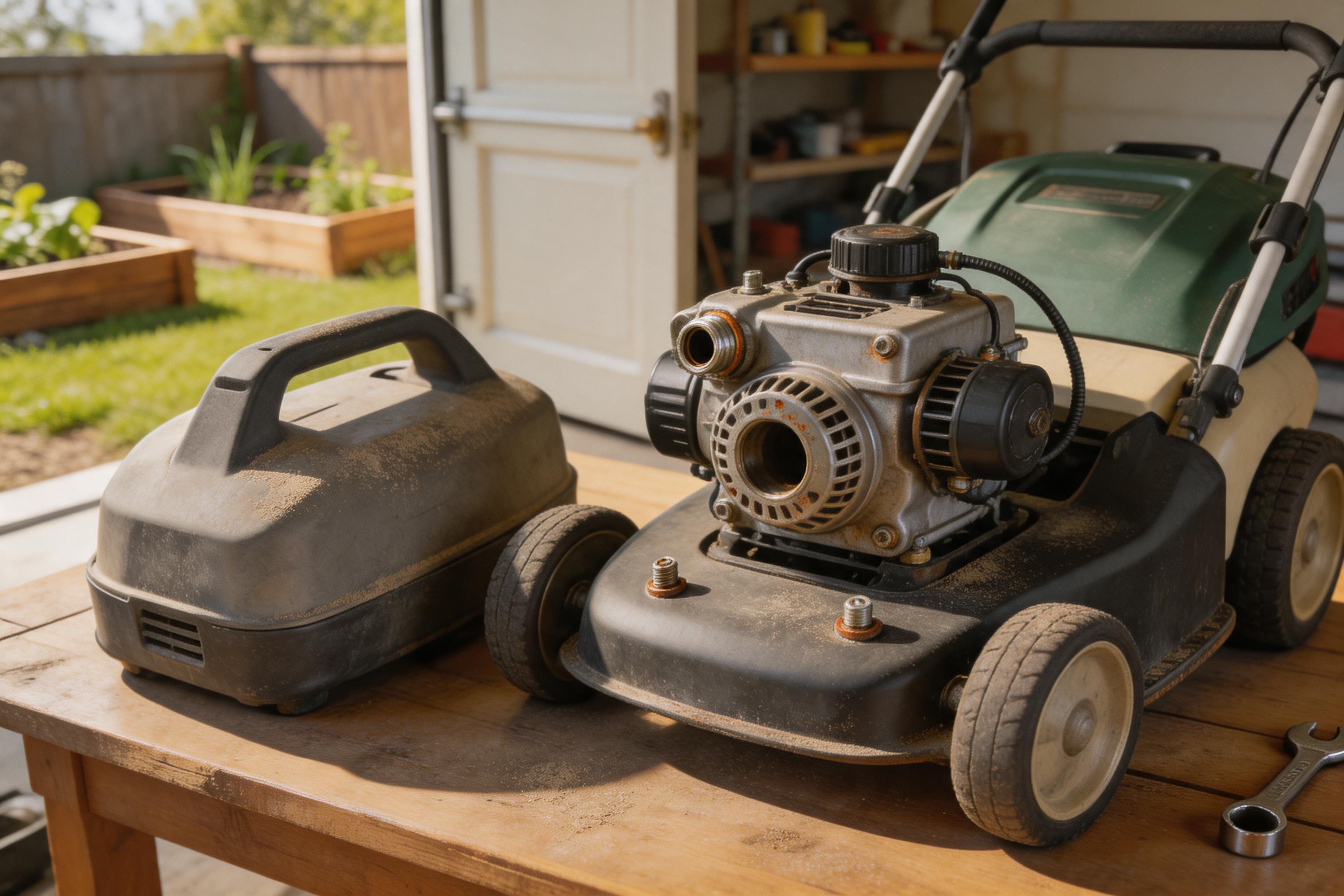
That is the spring-start reality most buyers see: dust, a little corrosion, and several smaller faults that can all look like one big electrical failure.
Clues that push the diagnosis toward "something else"
The coil is a weaker suspect when:
- the plug has not been replaced or tested
- the stop-circuit wire still looks questionable
- the mower was stored damp or dirty
- the flywheel area has visible rust scale or packed debris
Storage changes the environment around the coil first. The coil itself is not always the first thing to die.
Clues that push the diagnosis back toward the coil
The coil becomes more likely when:
- a known-good spark plug still shows no spark
- the kill wire is disconnected for test and spark still does not return
- the air gap is corrected
- the flywheel magnets look normal
- the problem repeats consistently
A sane spring-start sequence
- replace or test the spark plug
- inspect the boot and lead
- remove the shroud and inspect the coil area
- disconnect the kill wire temporarily for diagnosis
- verify the air gap
- retest spark
That order keeps the cheap, common storage failures ahead of the less common coil replacement.
Why this matters for buyers
People order coils when they are tired of pulling the rope. That is understandable. But after storage, the better professional habit is to clear the plug and grounding problems first. The right replacement part is useful only after the diagnosis is honest.