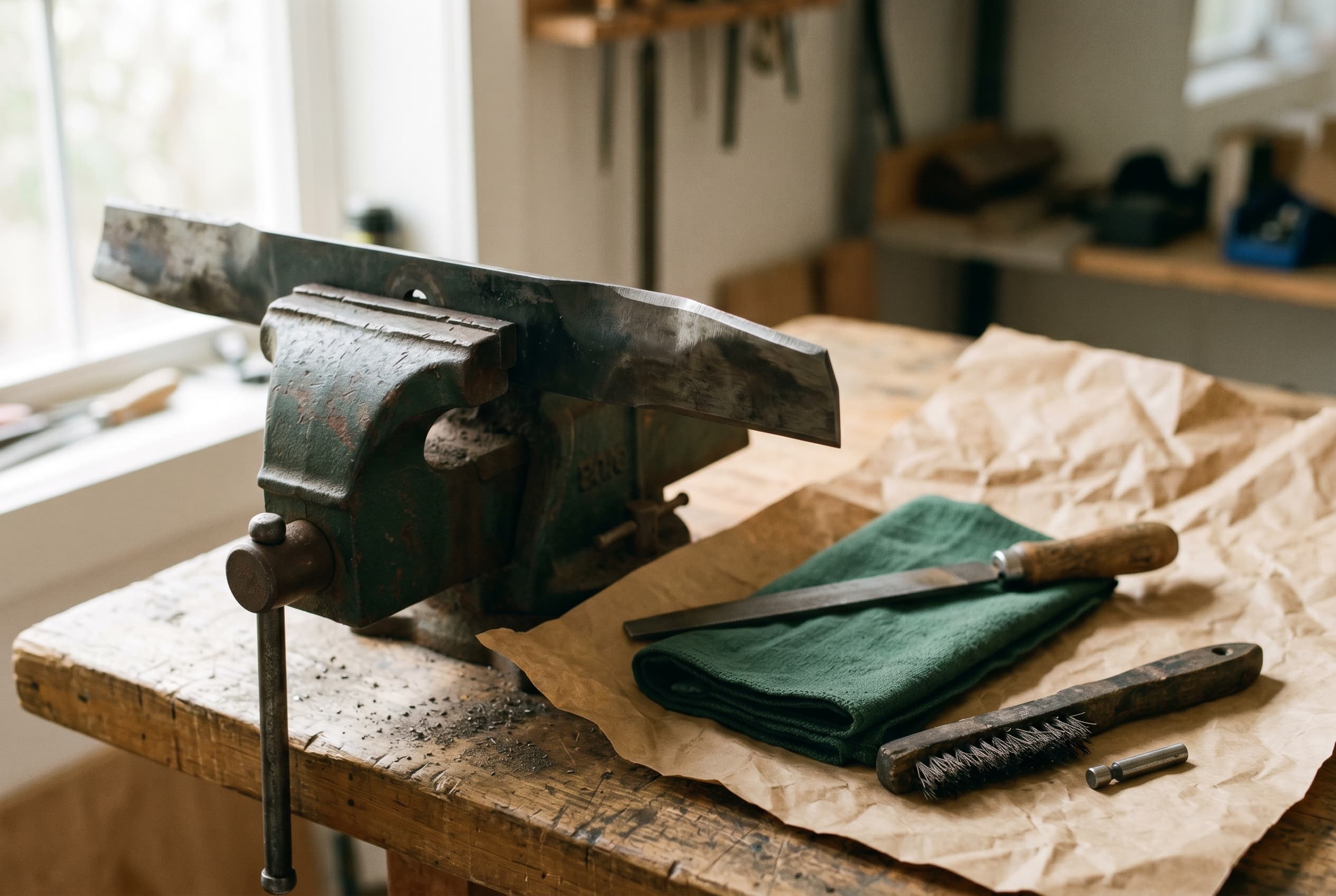
When a blade needs sharpening, not replacing
A mower blade is a wear part, not a consumable. A decent 1055-steel blade has many sharpening cycles in it before the cutting edge has been filed back far enough that the lift profile shortens and the cutter no longer throws clippings effectively.
You need a sharpen, not a replacement, when the cutting edge is rounded or nicked but the body is straight and the center hole is still sound. If the blade is bent, cracked, or shows a visible dip where a rock hit, it is done.
What you need
- A bench vise mounted solidly to a workbench
- A 10 or 12-inch mill bastard file
- A wire brush and a shop towel
- A balance pin or a simple horizontal nail fixture
- Work gloves and safety glasses
Do not use a bench grinder for a casual homeowner touch-up. Heat at the edge is how a good blade becomes a soft one.
01 — Remove the blade safely
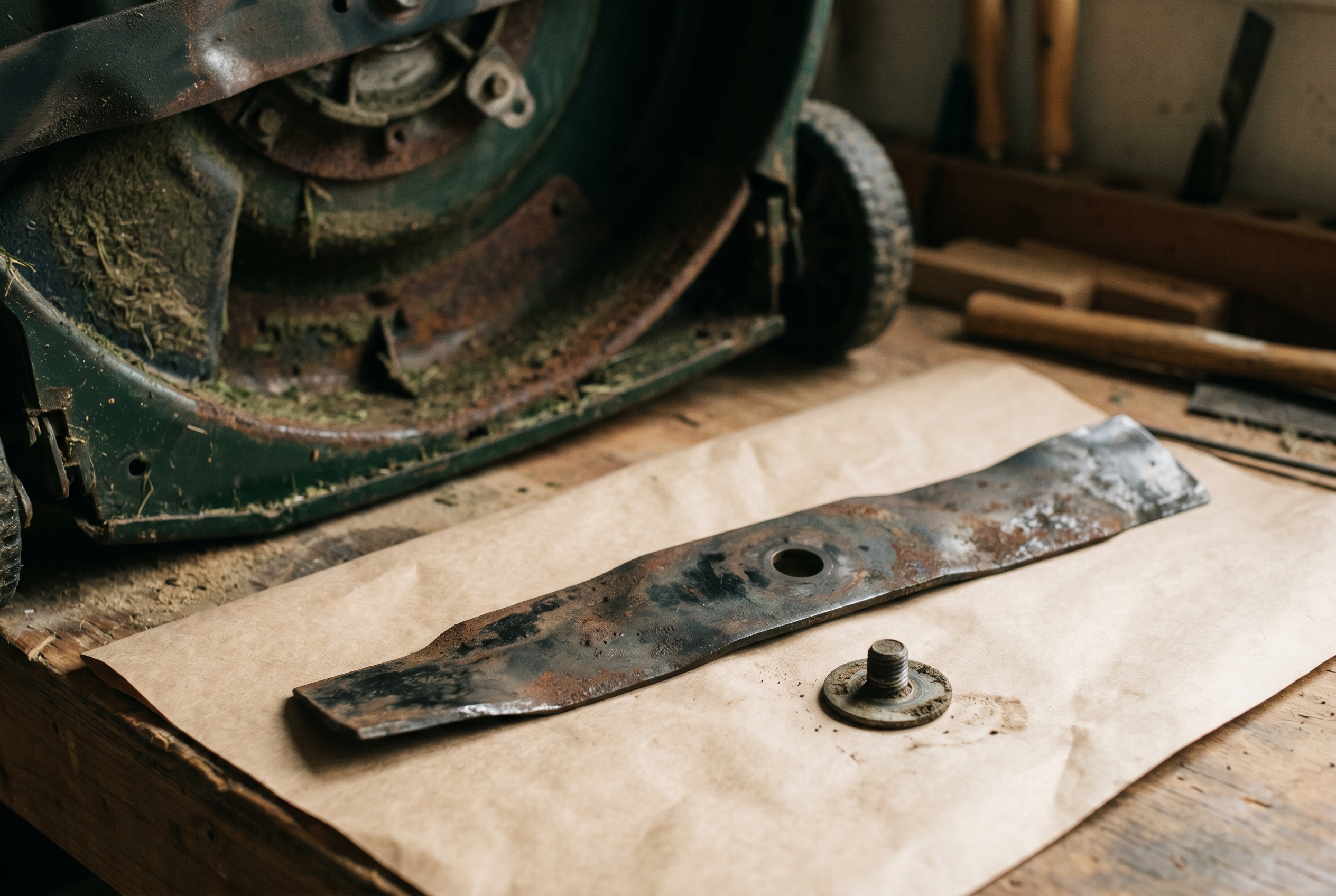
Before anything else: disconnect power. Pull the battery on a cordless mower or disconnect the spark plug on a gas mower. Tip the mower with the carburetor or air-filter side facing up. With a wrench on the blade bolt and a 2x4 jammed against the deck to stop rotation, break the bolt loose.
Mark the top side of the blade before you remove it. That one small step prevents an embarrassing upside-down reinstall.
02 — Clean and inspect the edge
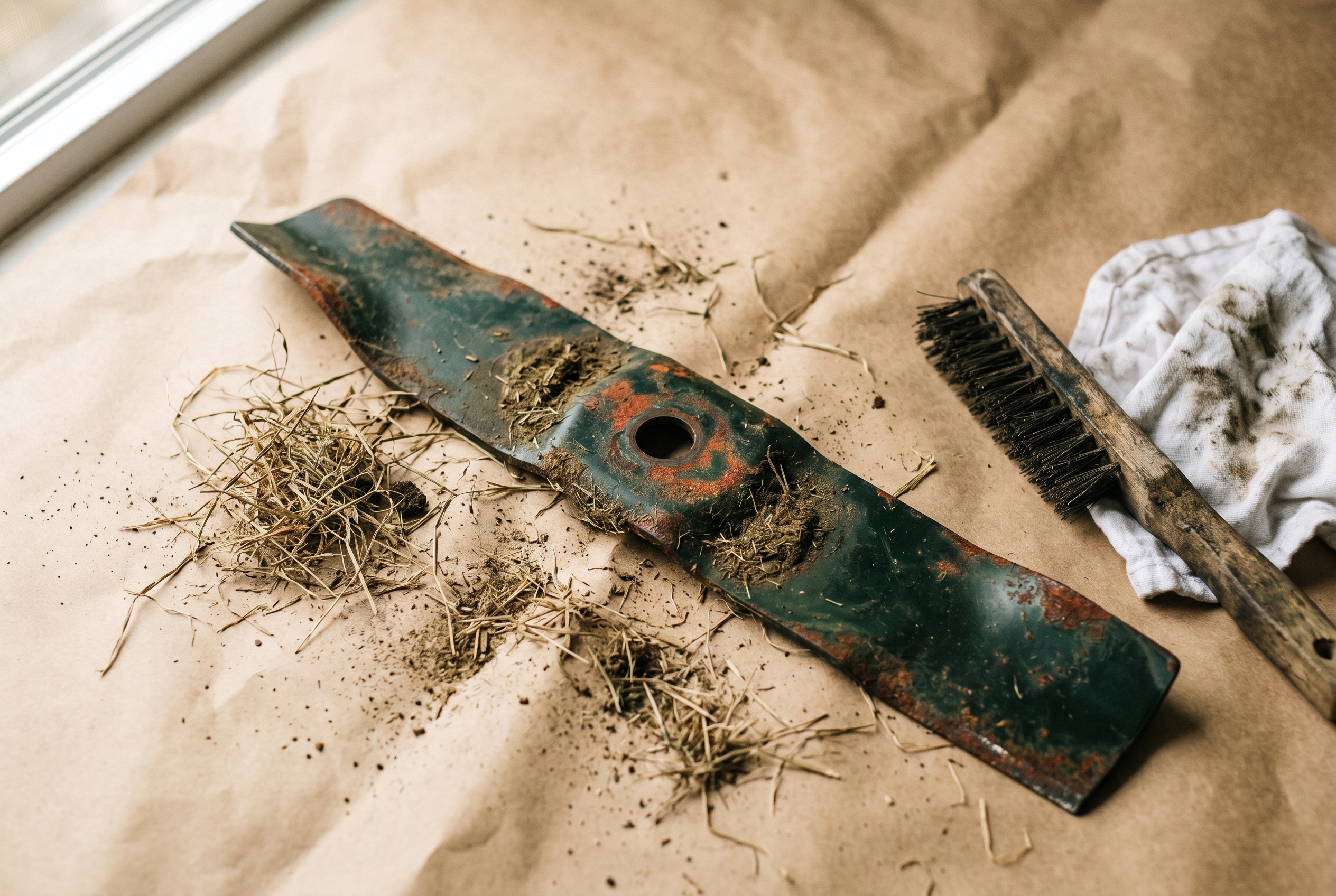
Lay the blade on the bench and wire-brush both sides until the dried grass, dirt, and oxidized oil are gone. Wipe with the rag and inspect the edge under a light.
A dull edge looks shiny and rounded. A good working edge looks dark because there is no broad flat left to reflect light. Also check the body for bends by setting the blade flat on the bench. Daylight under the center means the blade is bent and should be replaced.
03 — File the bevel at 30 degrees
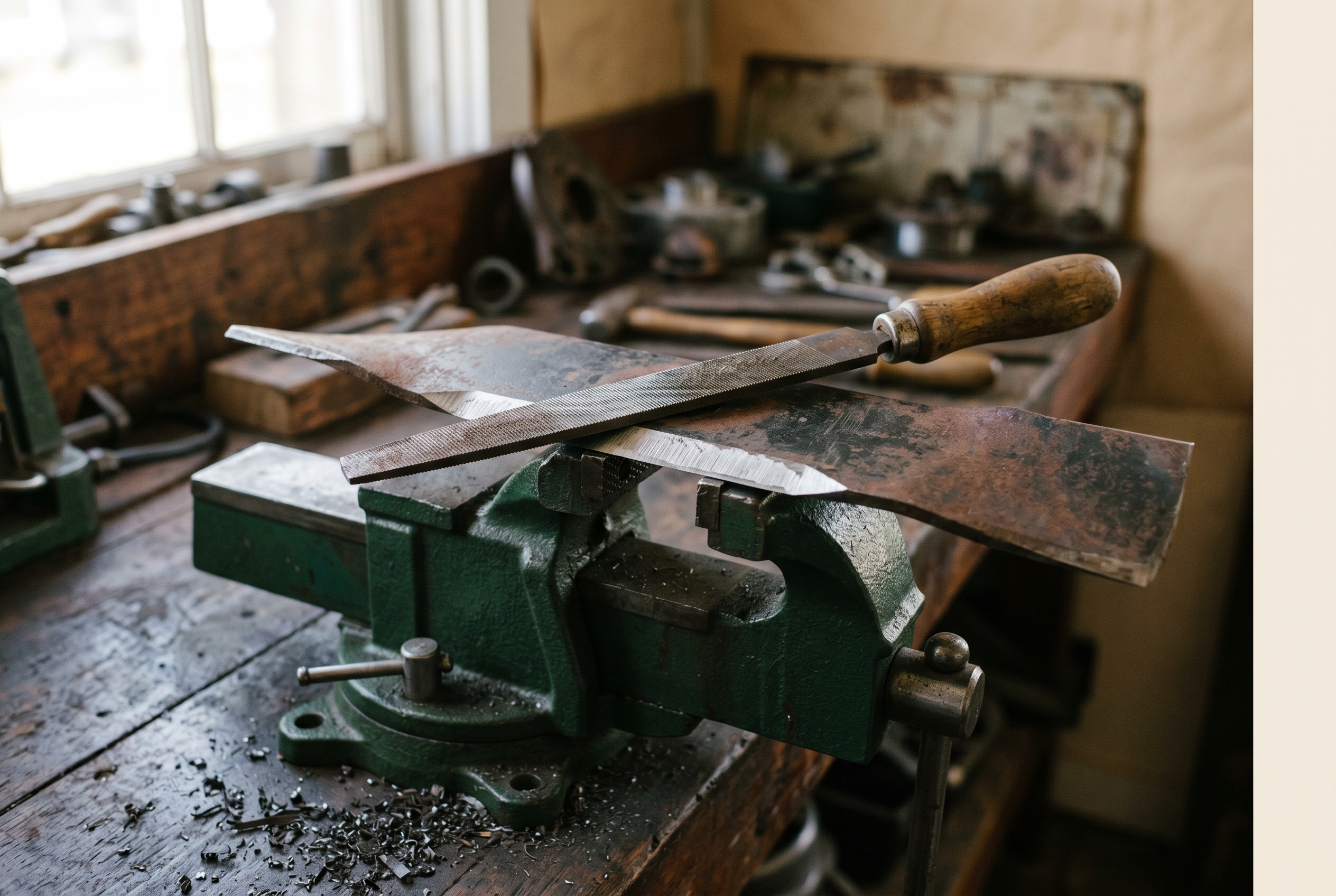
Clamp the blade in the vise with one cutting edge up. Set your file across the existing bevel at roughly 30 degrees from the flat of the blade. That angle is not arbitrary; it is close to the factory working bevel. Keep the file flat along the bevel's existing angle instead of inventing a new one.
Push strokes only. Five to ten firm passes usually restore the edge. Count strokes so both sides get the same treatment. An uneven blade is a vibrating blade.
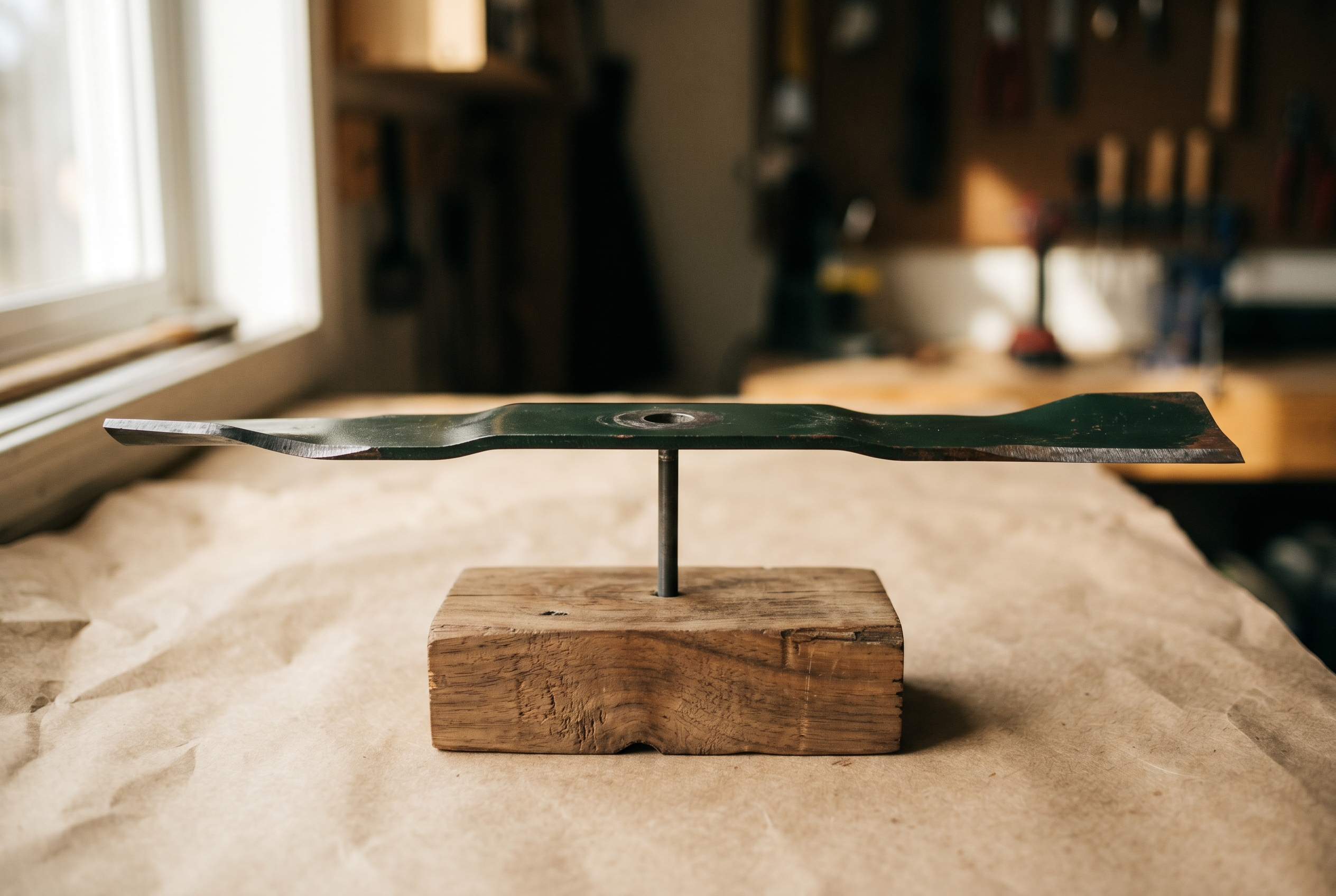
04 — Check balance on a nail or balance pin
A sharpened blade must be balanced. Set its center hole over a horizontal balance pin. A balanced blade sits level. If one side drops, that side is heavier. File one or two more strokes from the bevel on the heavy side and re-check.
Reinstall the blade with the marked top side up and torque the bolt to the mower's spec.
How often
For a standard quarter-acre lawn, sharpen every 10 cuts or roughly twice a season. More importantly, inspect after any strike into sticks, stones, or dry soil.