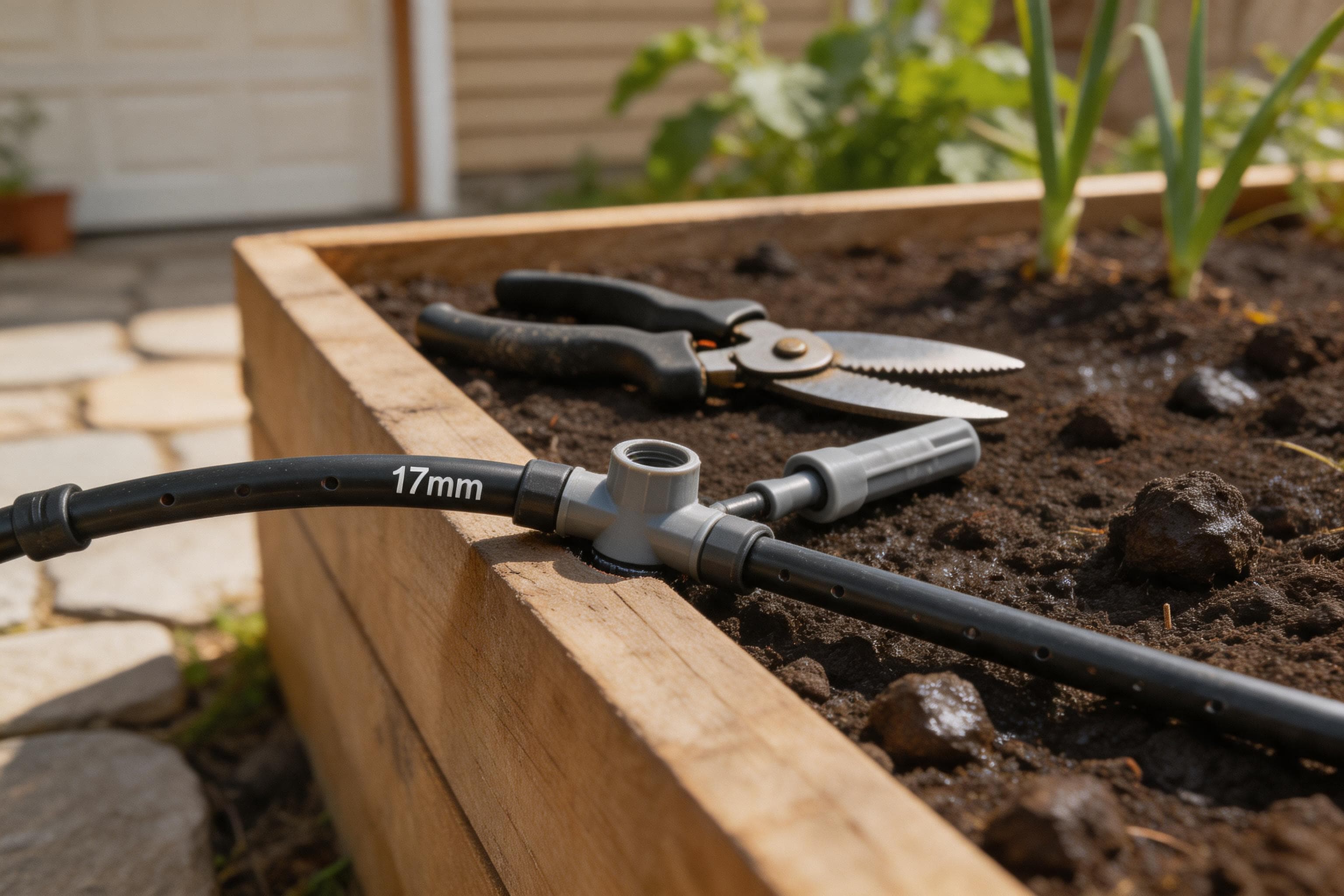
A slow leak at a drip compression fitting can waste more water than a visibly blown emitter because it hides in mulch and keeps reappearing after every half-fix. Most of these leaks come from the same causes: an angled cut, scarred tubing, or a fitting that was pushed on before the tubing relaxed.
Start by cutting back to sound tubing
Pull the tubing out of the fitting and inspect the end. If it is oval, scarred, or stretched shiny from a bad previous install, cut it back to fresh material. Do not reuse the damaged end just because it almost fits.
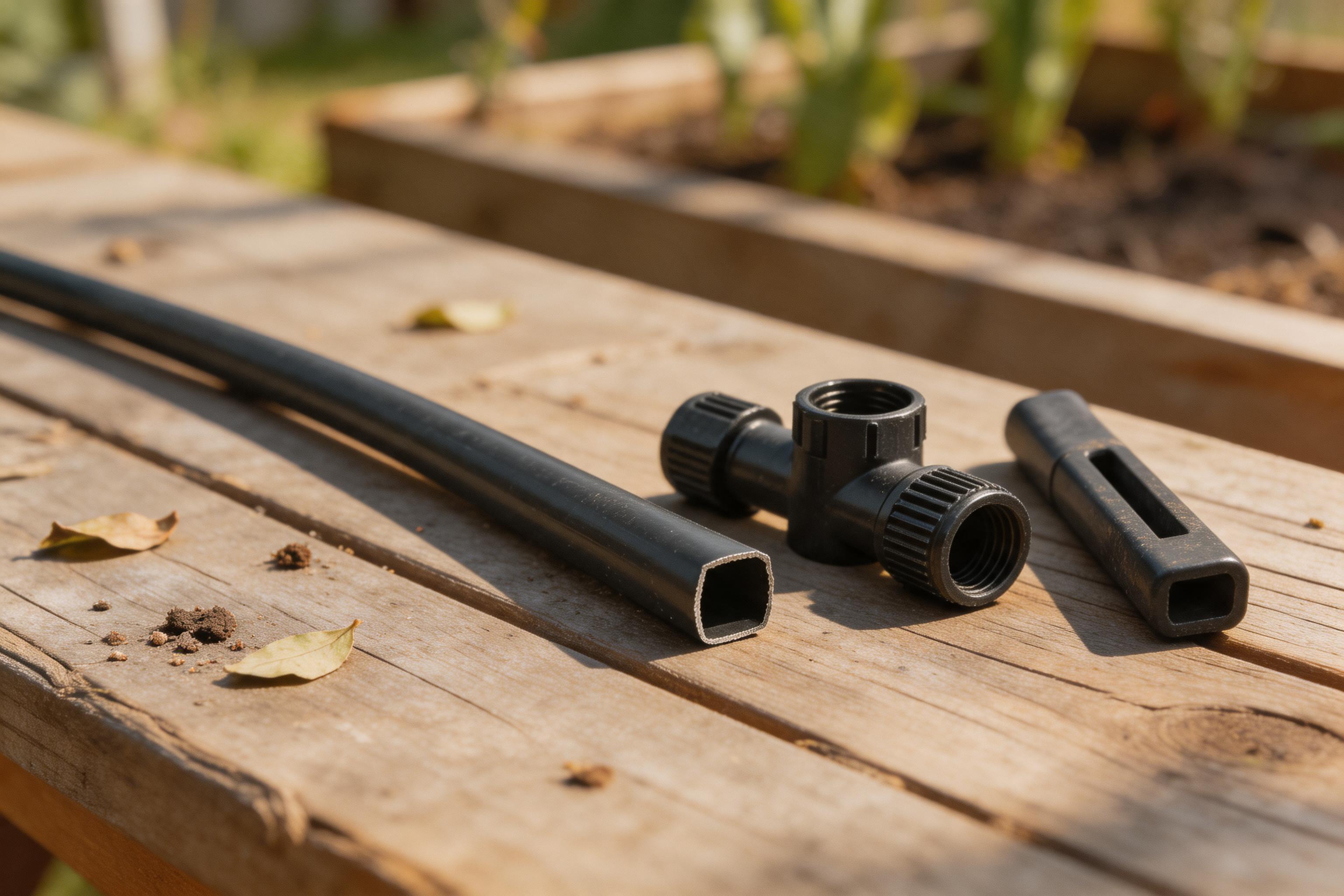
A square cut gives the fitting a chance to seal evenly around the full circumference.
Warm tubing is easier tubing
If the line is cold or stiff, leave it in the sun for a few minutes or warm it gently in clean water. Warm tubing seats deeper and twists less as it goes in. That reduces the temptation to over-force the fitting.
Re-seat once, not three times
Push the tubing in until it passes the barb and bottoms out evenly. If the fitting uses a compression collar, snug the collar only after the tubing is fully seated. Repeated half-installs chew the tubing and make the next leak more likely.
After the water comes on
- Check the fitting dry first, then again after five minutes.
- Tug the tubing lightly to confirm it does not back out.
- Stake the line so the fitting is not carrying bending load.
If the leak returns after a fresh cut and a proper seat, replace the fitting itself. Cheap collars and out-of-round tees do not improve with patience.