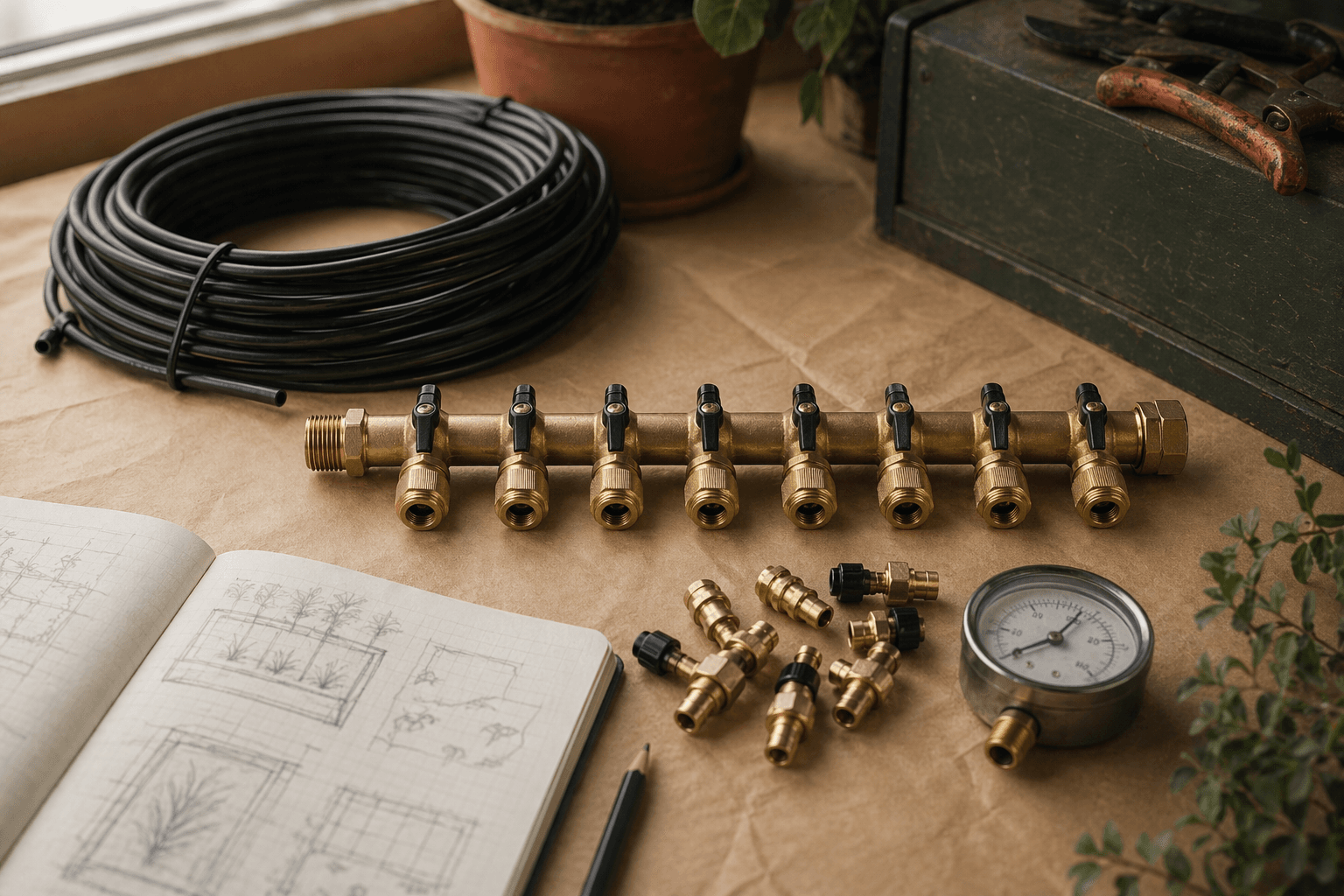
We run 32 beds out of two manifolds
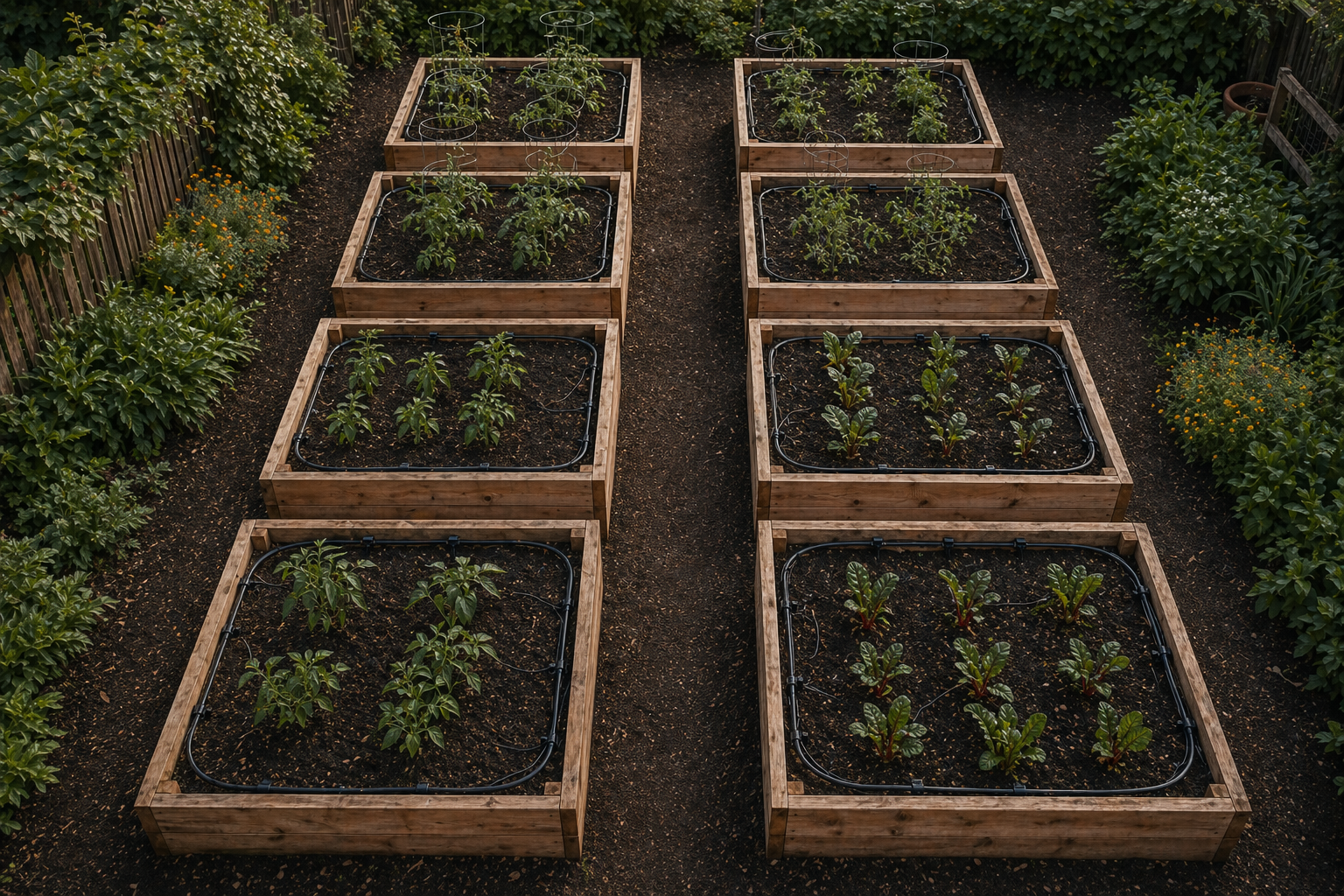
I coordinate a community garden in southeast Portland: sixteen 4×8 cedar beds on one side of the shed, sixteen on the other, plus two rows of perennials along the back fence. Until this year we irrigated by timer-on-hose-bib-plus-four-way-splitter, which is what most of us started with and what most of us eventually outgrow. When too many members asked me "why does bed 14 always look bone-dry?" I started looking at manifolds seriously.
The APOROZONA AP—Q08—DR — their 8-port brass manifold with 3/4" NPT inlet — landed in the middle of my short list because of the material. I did not want a plastic manifold that I'd have to replace in three seasons because UV had chalked it. Brass is forever. Yes, $52 each is nearly twice what the plastic equivalents cost. For a community garden where I pay for parts out of our small annual dues, that mattered. But the thirty-year outlook mattered more.
What the season demanded
Portland summers are drier than people remember. June through September last year we had twelve days over 95°F, and during those stretches the beds with shallow-rooted greens (lettuce, arugula, bok choy) needed water twice daily. Deep-rooted beds (tomatoes, peppers, the basil forest) wanted one long soak every other day at most.
I set up zone 1 (shallow beds) with 2 GPH emitters every 10 inches and zone 2 (deep beds) with 1 GPH pressure-compensating emitters every 16 inches. Both zones run off the manifold through 1/2-inch black poly. The manifold's ball valves let me dial individual beds up or down without unthreading anything.
https://img.manualstool.com/aporozona/tutorials/a-season-on-the-q08-drip-manifold/SCENE_01.png
What worked
The 8-port valving is the feature that matters. Each port has its own 1/4-turn shutoff. When member Lisa's cucumber bed wanted 4 hours and Marcus's chard wanted 90 minutes, I could solve that with the manifold and a digital timer upstream — no zone controller needed.
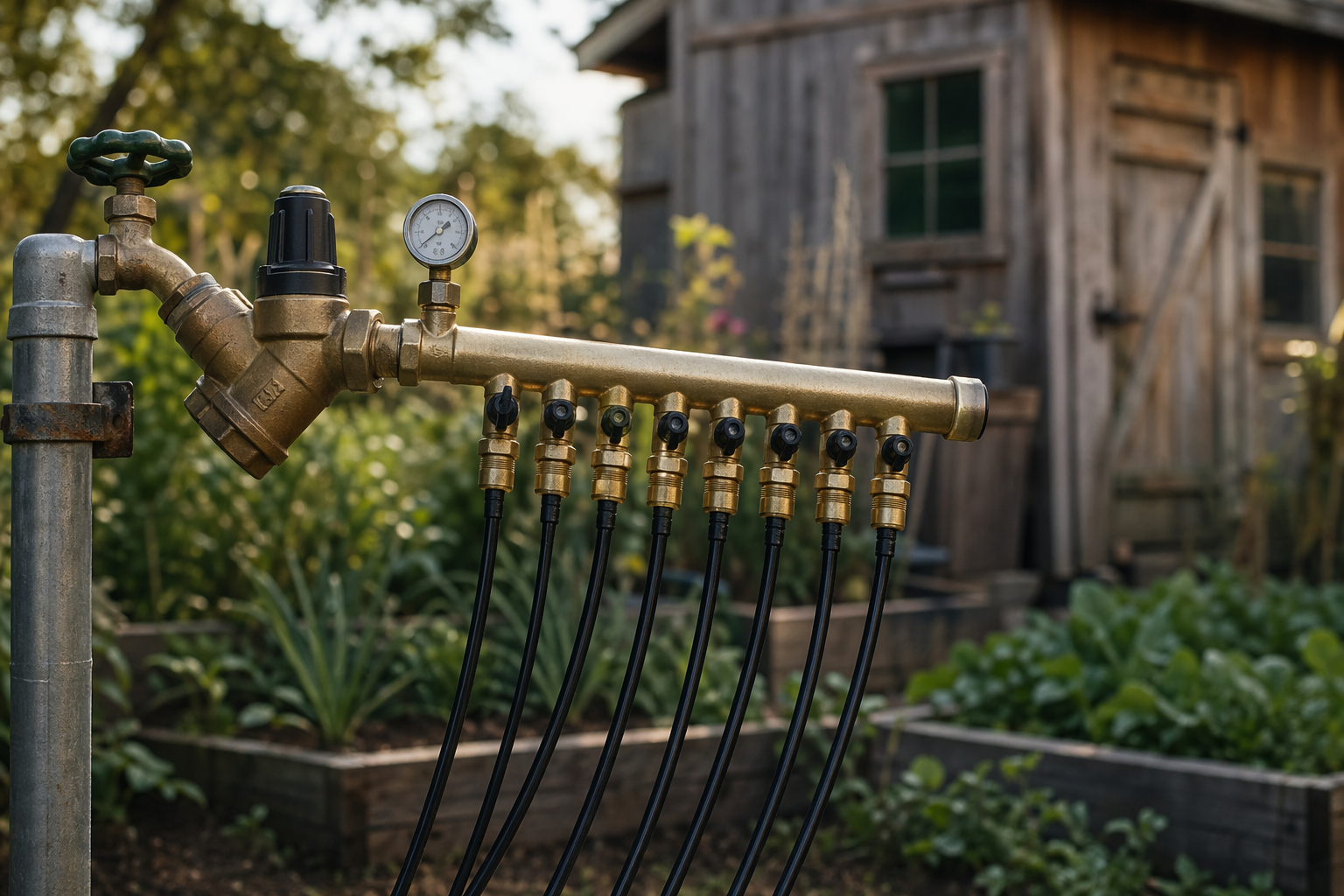
The brass bodies don't weep. I have a pressure gauge downstream of the regulator and I checked it three times across the season: 24 PSI at start, 24 PSI at midsummer, 24 PSI at shutdown. No creep, no leaks.
The barb fittings on the outlets take 1/4-inch spaghetti line directly. We did not need any adapters. Install took about forty minutes per manifold, most of which was teflon tape.
https://img.manualstool.com/aporozona/tutorials/a-season-on-the-q08-drip-manifold/SCENE_02.png
What to watch
One port on my first manifold had a burr inside the barb that caught the first piece of tubing I tried to push on. A Swiss Army knife blade dragged along the inside cleaned it up in about fifteen seconds. The second manifold had no such issue. Quality control on brass forging is never going to be perfectly uniform; a burr like that is expected.
Winterization: we disconnected both manifolds from the risers, blew them out with an air compressor, and hung them in the shed. I would not leave brass irrigation parts outside in a Portland winter unless I wanted to gamble on a hard freeze splitting a valve body.
Next season
We are adding a third manifold to cover the perennials along the fence, and I expect to be running all three for at least the next decade. For that lifetime the cost math makes sense. And my members stopped complaining about dry beds in August.
— Janelle K., Portland Community Garden Coop