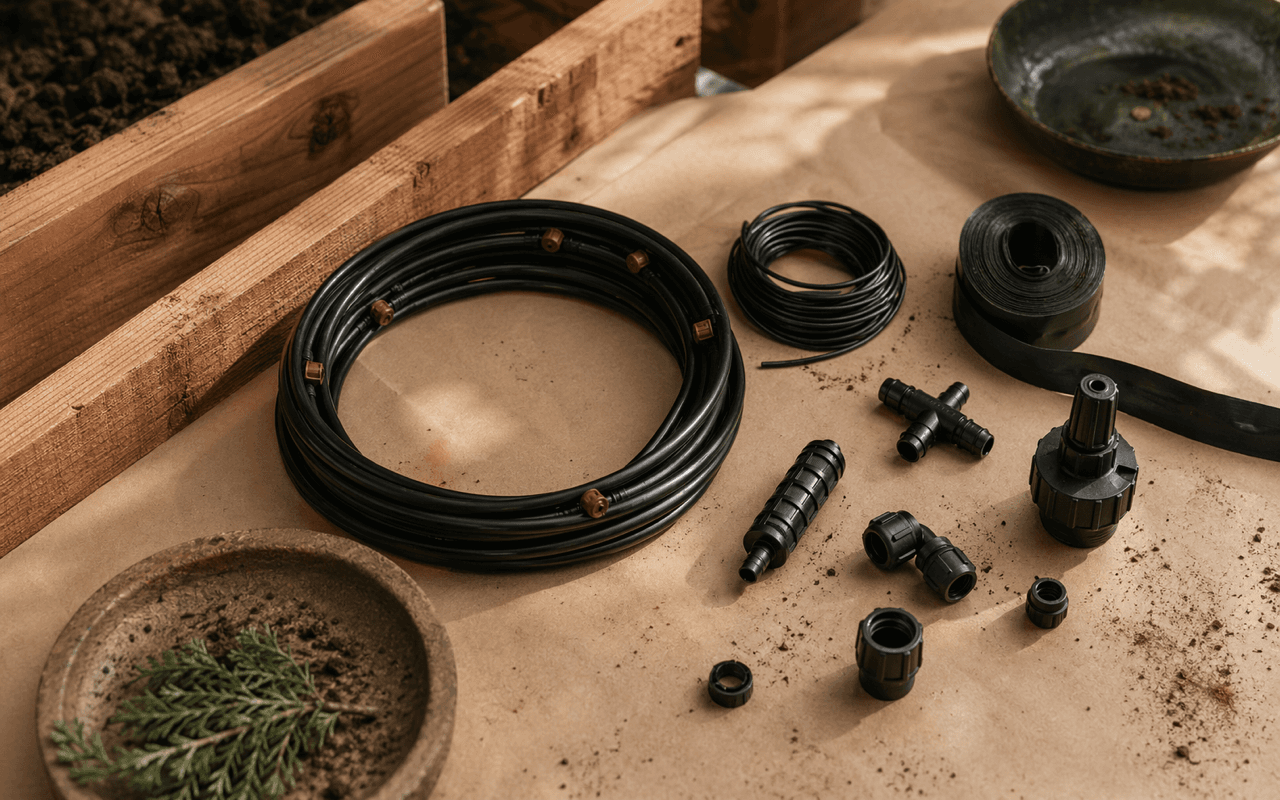
The plot and the plumbing
Three raised beds behind the shop carried the same summer experiment: identical water source, identical upstream stack, different delivery layouts. Static pressure at the hose bib was high enough to punish weak connections, so every bed started with the same brass vacuum breaker, fine-mesh filter, and 12 PSI regulator before the water reached the crop rows.
The question was not whether drip irrigation worked. It obviously did. The real question was which layout kept working after heat, replanting, weeding, and the ordinary rough handling that a home garden receives all season.
The layout that stayed
The closed-loop inline-emitter layout won because it tolerated reality better than the cleaner-looking alternatives. Drip tape produced good distribution but hated replants and accidental cuts. Thin spaghetti-line layouts offered precision but multiplied leak points at every barb and stake.
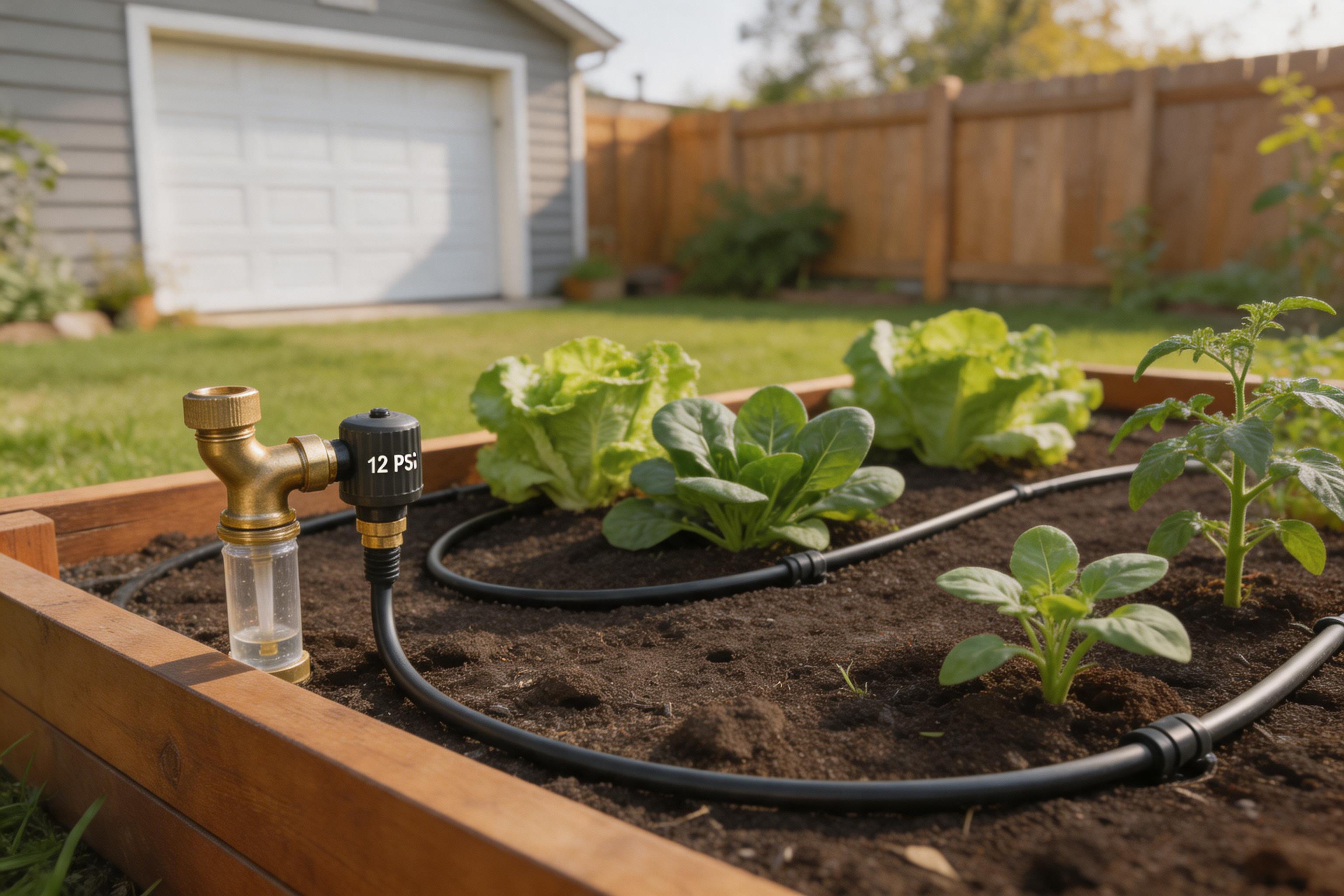
The photo above shows the version we kept: a filter and regulator stack that stays accessible, then emitter tubing that loops back instead of dead-ending at the far end of the bed.
Why the loop behaved better
The loop reduced the pressure difference between the first emitters and the last. More importantly, it made field service easier:
- Flush from one end without dismantling the whole bed.
- Re-seat one fitting without rebuilding six others.
- Add or remove a crop row without replacing the entire run.
That matters more than elegance. Garden systems fail at the connection points people touch most often, not in the diagram that looked clean on install day.
The cheap parts that become expensive
The weak links were predictable. Soft barbs, thin washers, and fittings that only partly seated all failed faster once they spent a few hot weeks under pressure. A regulator and filter are not glamorous purchases, but they are the parts that keep the rest of the system calm.
The practical rule we kept from the trial was simple: spend money where leaks begin, simplify the number of joints, and make the flush point easy enough that you will actually use it.
The lesson for buyers
Irrigation parts are often sold like categories of interchangeable plastic. They are not. Thread style, tubing size, regulator pressure, and fitting quality all decide whether the system waters the bed or the path beside it.
The best raised-bed layout was not the one with the most adjustable pieces. It was the one that handled a full season of dirt, sunlight, and interruption without demanding a weekly repair ritual.