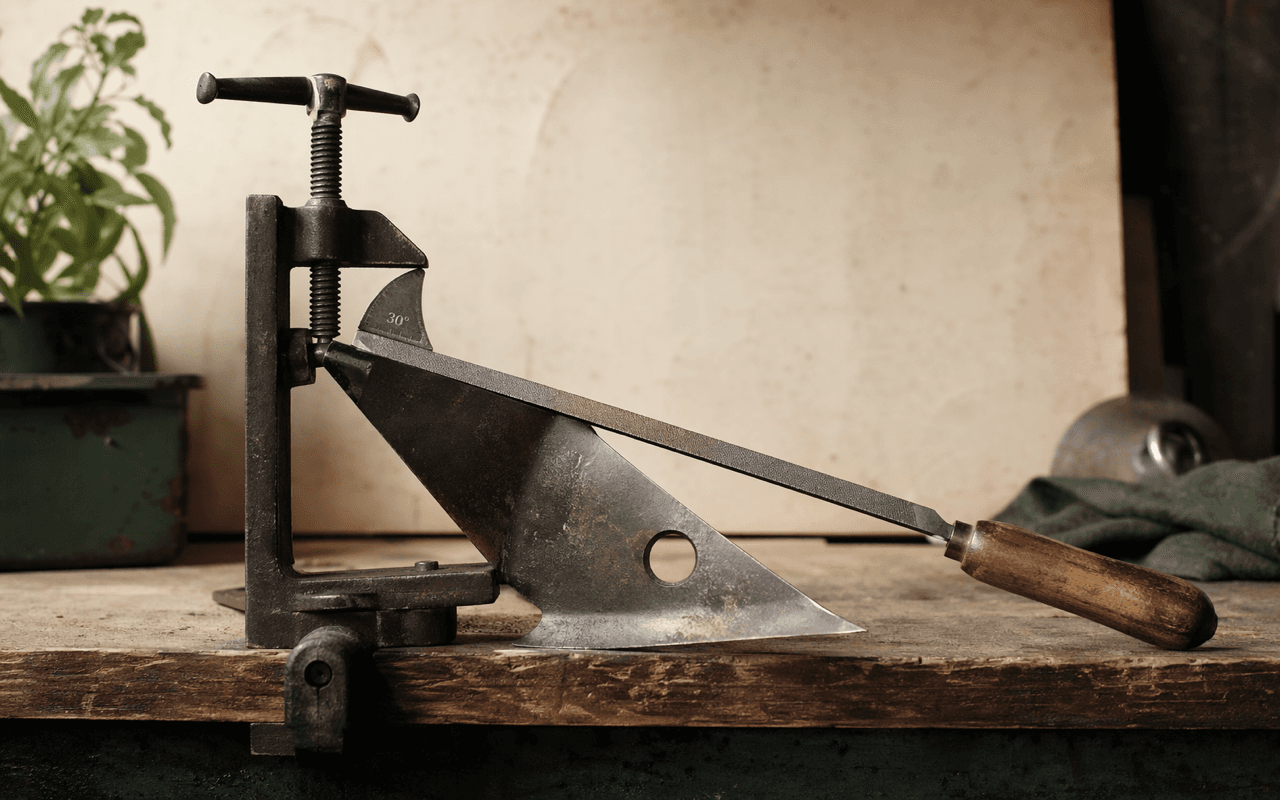
The expensive habit
The common failure mode for a mower blade is not catastrophic breakage. It is neglect. A blade starts sharp, clips a few hidden stones, drags through dry soil at the edge of a bed, and then keeps mowing long after the edge has stopped slicing. The lawn looks pale and fuzzy at the tips, discharge gets heavier, and somebody decides the only answer is a new blade.
That is usually the wrong conclusion. A decent blade has already been rolled, blanked, heat-treated, balanced, and finished before it ever reaches the mower. On the common APOROZONA-style AR and BR blade families, the blank itself still has useful life left after many ordinary dulling events. What has changed is the edge geometry, not the value of the steel.
What dull actually looks like
Dull is not mystical. In practical terms it means the edge radius has grown, the bevel has drifted, and the steel behind the edge has been abraded enough that grass is being torn before it is being cut. The visual symptom is familiar: gray tips, frayed edges, and a lawn that looks tired two hours after mowing.
For most homeowner rotary work we are trying to maintain a durable working bevel, not a knife edge. If the blade still has sound steel, a clean file pass and a balance check usually return more value than a replacement order.
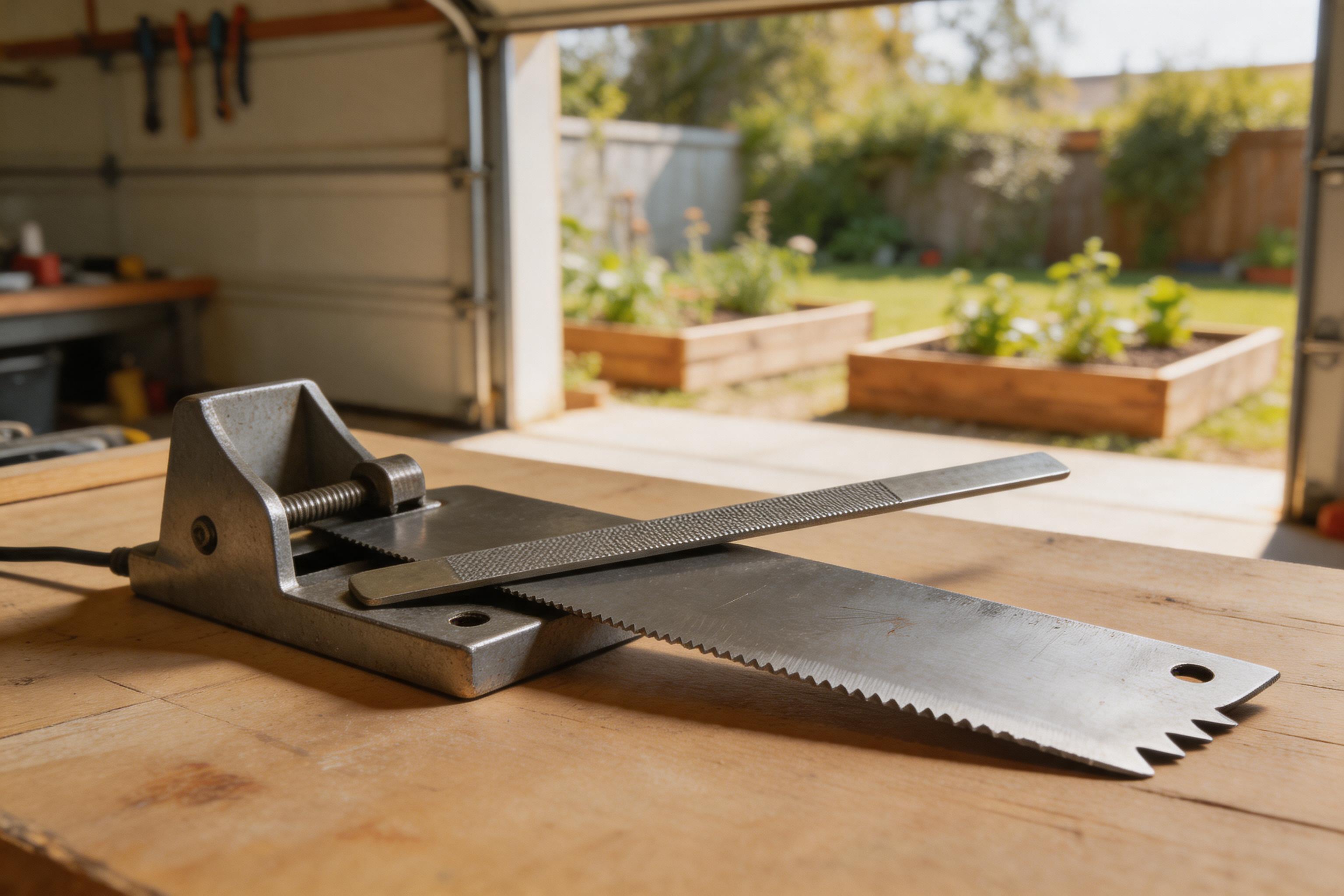
The image above is the standard posture: hold the blade securely, read the existing bevel, and restore the geometry without overheating the edge.
Why heat changes the argument
The danger with hurried sharpening is not only removing too much material. It is temperature. Bench grinders are useful, but the last thin band of steel at the edge is where the temper matters most. Once you blue that line, you are no longer preserving the original heat treatment; you are undoing it.
That is why a file still belongs in the shop. It is slower for the first few seconds and faster for the rest of the season because it keeps the edge cool, leaves a readable witness line, and forces the operator to pay attention to shape instead of sparks.
The numbers still favor maintenance
A homeowner blade that costs thirty or forty dollars and takes a few quiet minutes to restore almost always has several good sharpening cycles in it before width loss, imbalance, cracks, or center-hole wear end the conversation. Resharpening also reduces drag on the spindle and leaves a cleaner cut in ordinary grass.
The practical sequence is simple:
- Clean the blade before judging it.
- Restore the existing bevel instead of inventing a new one.
- Remove only enough material to reach sound steel.
- Balance the blade before reinstalling it.
What we keep and what we scrap
We keep blades that are merely dull. We scrap blades that are cracked, severely pitted near the mounting area, twisted beyond safe correction, or missing enough metal that balance cannot be recovered. Those are structural problems, not maintenance problems.
The discipline matters because it changes how a buyer shops. A sharp, balanced blade is sometimes the right answer to a mowing complaint. The right catalogue earns trust by saying that plainly. A dull blade is often not a dead blade. It is a service interval that arrived on schedule.